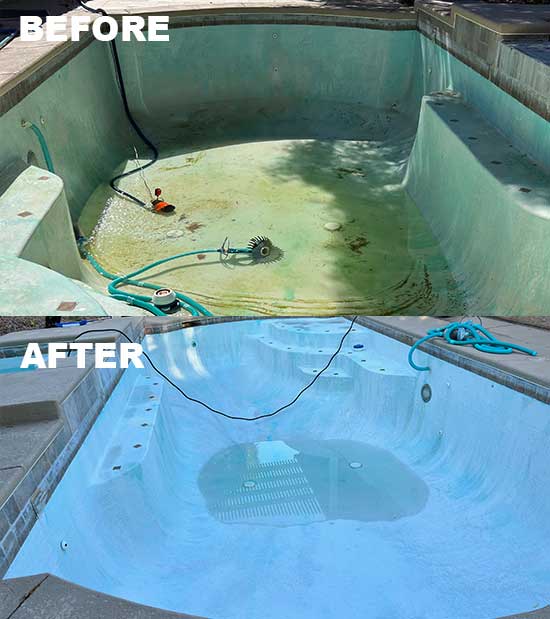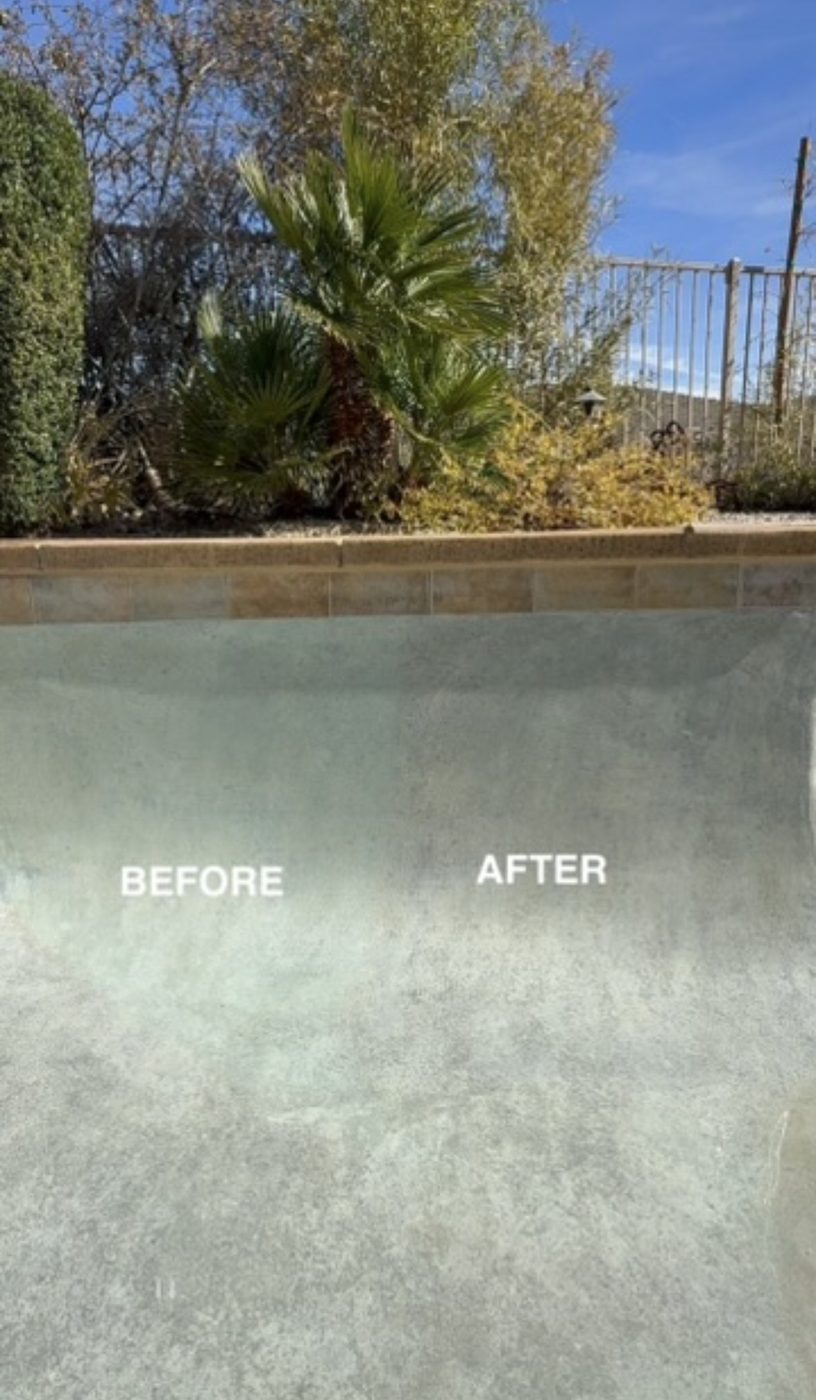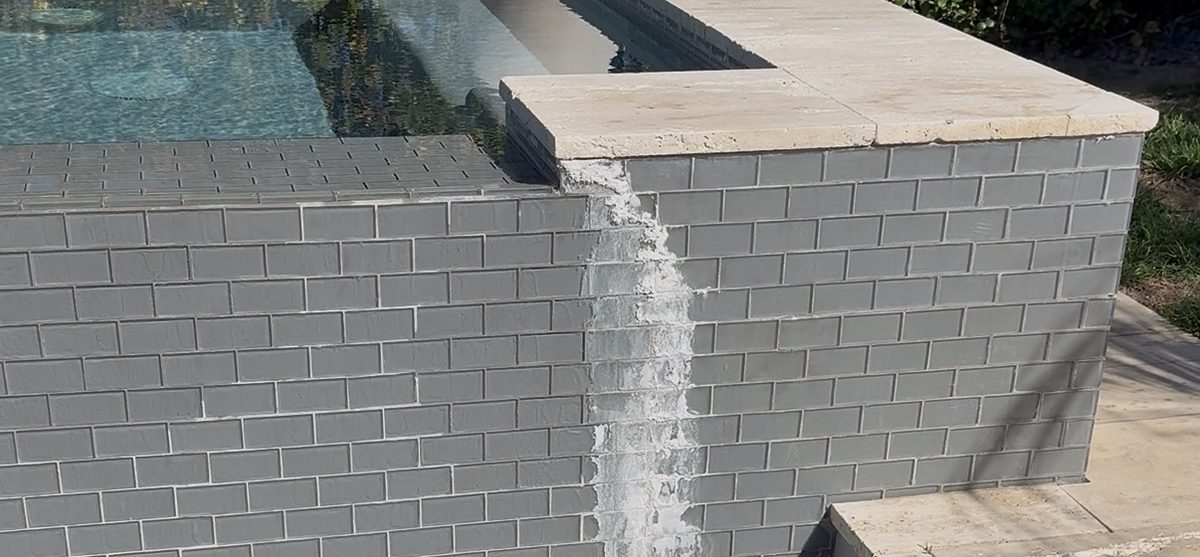
That white crust on your tile isn't dirt. It's Las Vegas water.
Las Vegas and Henderson pools start out hard. The Southern Nevada Water Authority rates valley tap water at 280 ppm (16 grains per gallon) of hardness, which it classifies as "very hard."1 The City of Henderson reports its water at about 304 ppm (18 gpg).2 That hardness is mostly calcium and magnesium, carried into Lake Mead by the Colorado River.1,2 It isn't a health issue.1 It is a pool issue, though, because the desert keeps concentrating it.
Here's how to tell whether calcium is building up in your pool, why it happens, what it does, and when brushing and chemicals stop being enough.
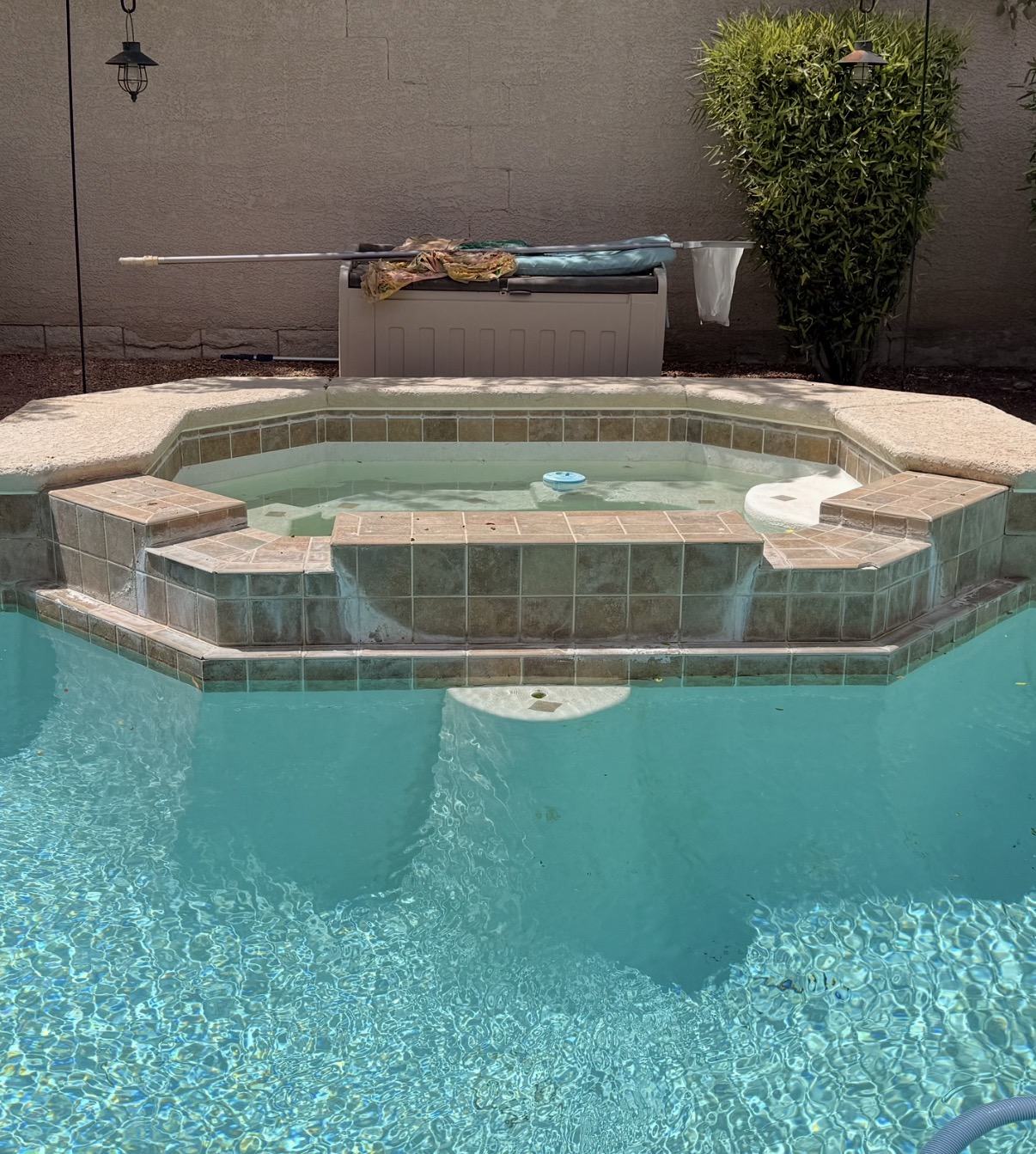
Walk Out and Check: Signs Your Calcium Is Too High
You don't need a test kit to spot the early signs. Take two minutes at the pool:
- A white or gray line at the waterline that a brush won't remove. Evaporation lines on tile are a common kind of calcium scale.10
- Crust on rock features, spillways and return fittings. Scale shows up first where the water is warmest and the pH is highest.10
- Cloudy water even though chlorine reads fine. Water with high calcium hardness turns cloudy unless pH and alkalinity are low enough to balance it out.7,8
- Plaster that feels rough or sandpapery under your feet and hands.8
- White flakes or grit settling on the floor or blowing out of the returns.
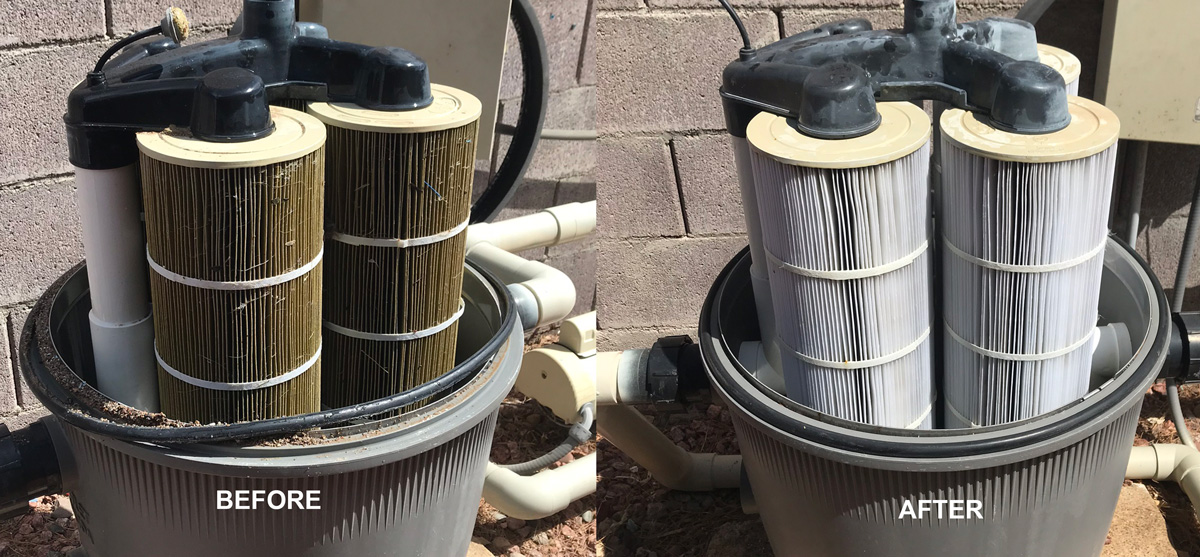
- A filter that clogs fast and pressure that climbs. Scale can clog filters and cut circulation, which pushes pressure up.8 Our guide on how often to clean your pool filter covers the pressure rule of thumb.
Why Las Vegas Pools Build Up Calcium
1. Hard fill water from Lake Mead
Roughly 90% of Southern Nevada's water comes from Lake Mead via the Colorado River.1,2 Both Las Vegas and Henderson get water treated at the same SNWA plants.2 So every pool in the valley is filled, and topped off, with very hard water.1,2
2. Evaporation and top-offs
Water leaves your pool as vapor, and the minerals stay behind. SNWA estimates an in-ground pool loses 48.6 gallons per square foot per year to evaporation. For a typical Southern Nevada pool of about 470 sq ft, that's as much as 22,842 gallons a year.3 Every gallon your autofill or hose puts back brings more calcium with it, so hardness keeps climbing between drains.
3. High pH (and high alkalinity)
High calcium on its own usually isn't what drops scale out of the water. It takes calcium plus high pH, warm water and/or high alkalinity.10 The industry measures that combination with the Langelier Saturation Index (LSI), which factors in temperature, pH, alkalinity, calcium hardness, cyanuric acid and total dissolved solids.9 At 0 the water is balanced. As the number climbs, the water tends to scale. Taylor Technologies flags +0.5 or higher as scale-forming.8 Las Vegas summers keep water warm, so pH control matters even more here.
4. Cal-hypo chlorine
Calcium hypochlorite ("cal-hypo," common in granular shock and some tablets) adds calcium every time you use it. Per the Pool & Hot Tub Alliance (PHTA), it adds 0.8 ppm of calcium hardness for every 1 ppm of chlorine it adds.6 Raising chlorine by 10 ppm with cal-hypo therefore adds about 8 ppm of hardness. Cal-hypo can also push pH and alkalinity up.6 In a pool that's already hard, that's calcium you don't need.
5. New or etching plaster
Freshly plastered pools shed "plaster dust" during start-up. That cloudiness typically lasts about 7–10 days after the fill.12 Plaster dust is calcium carbonate, but it comes from the surface, not the water.10 At the other extreme, water that's under-saturated pulls calcium out of plaster and grout (etching).8,9 Either way, the plaster ends up feeding calcium into the water.
What High Calcium Does to Your Pool
- Scale on the tile line. You get the white band you can't brush off, plus crust on water features.8,10
- Cloudy, dull water. Excess calcium causes cloudiness and scale formation, and it reduces how well disinfectants work.7,8
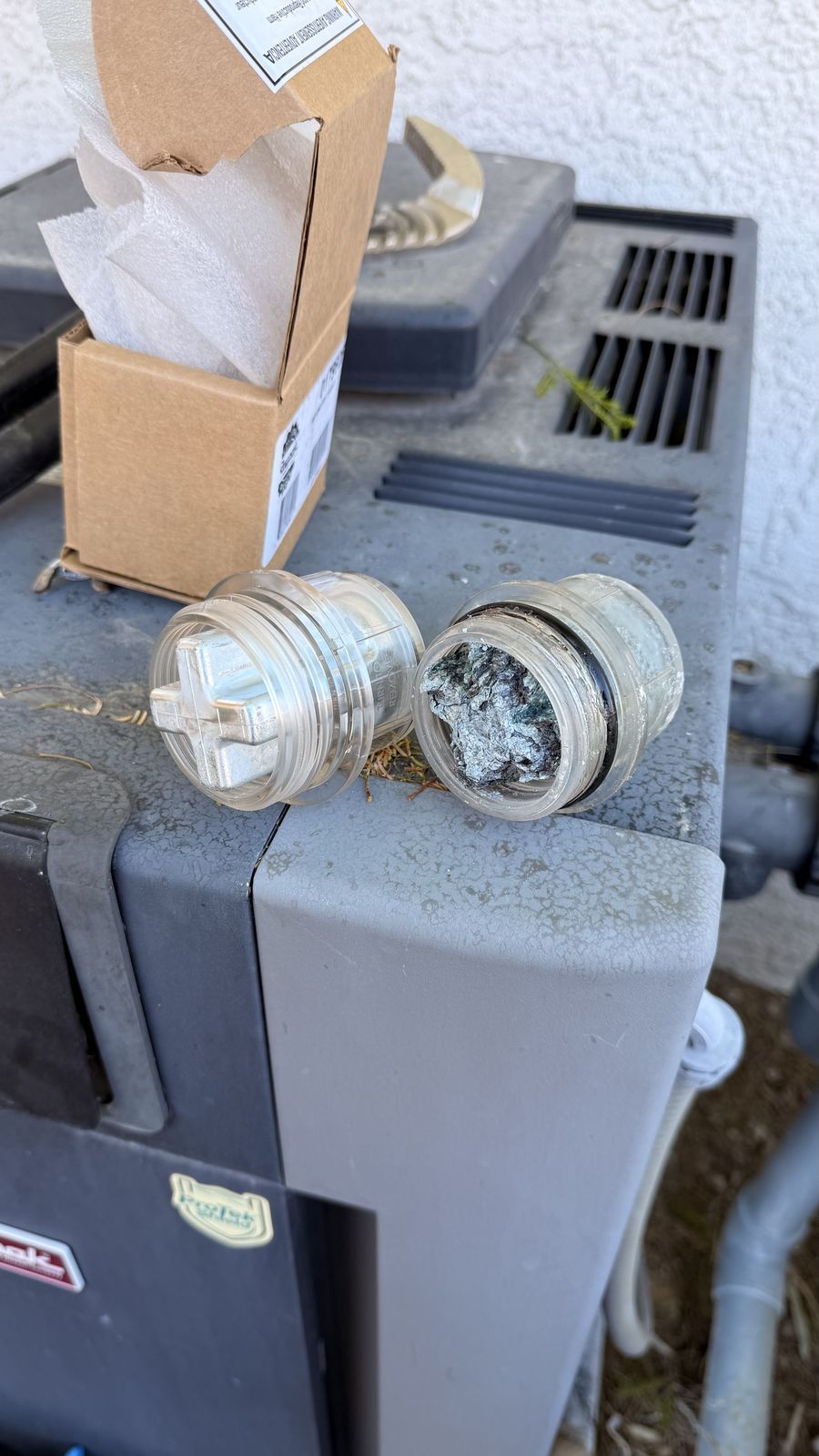
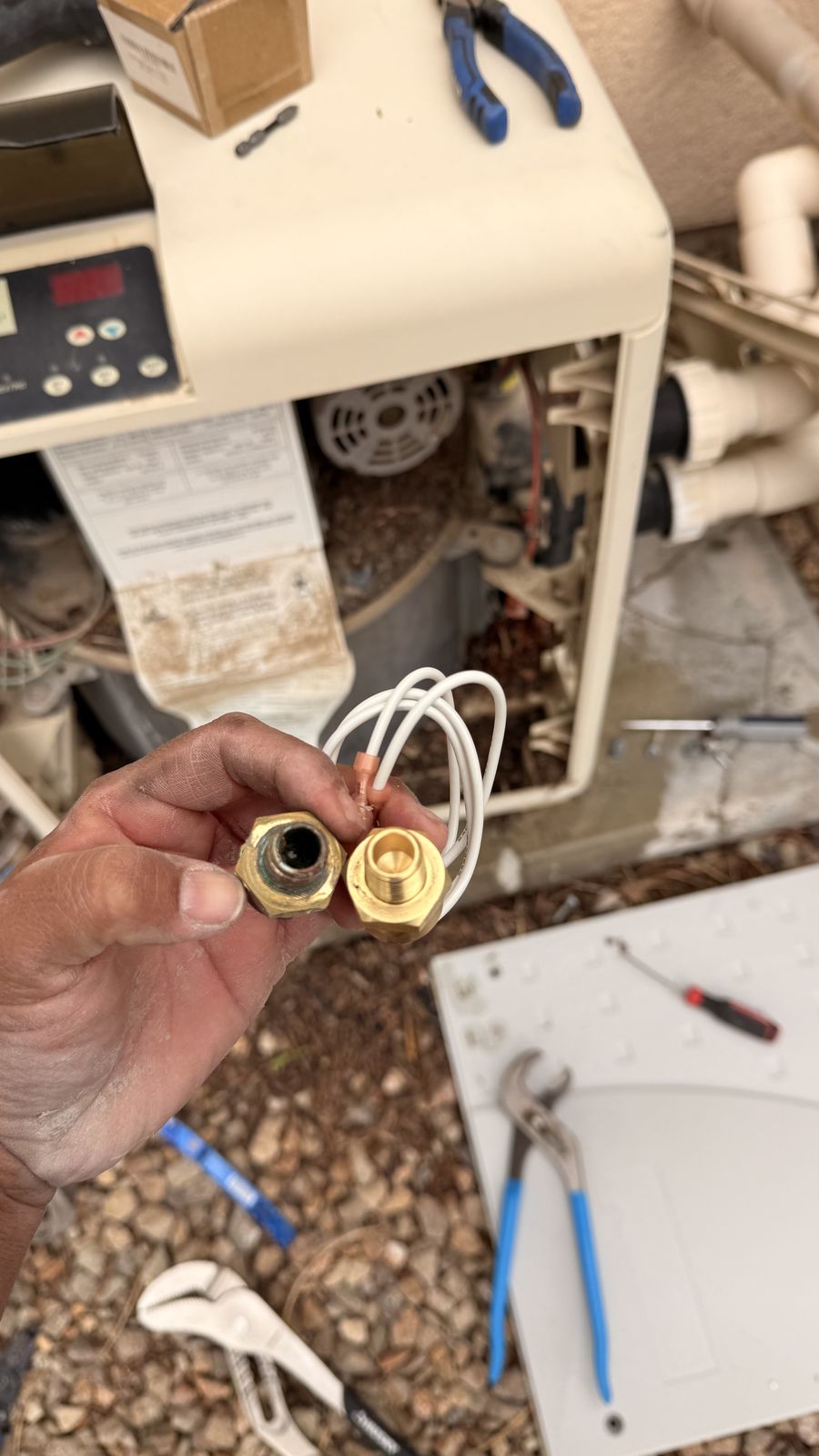
- Clogged filter, scaled heater and salt cell. Scale clogs filters and builds up in piping, cutting circulation.8 In heaters it's worse: hotter water holds less calcium, and scale on the coils acts as insulation. That makes the water more expensive to heat and can eventually cause the heater to fail.5,8 On salt systems, scale typically forms first on the cell plates, where it can go unnoticed. Left there, it reduces chlorine output and shortens cell life.11
- Rough surfaces. Scaled plaster can scrape skin and snag swimsuits, and it gives microorganisms something to anchor to.8
- Wasted chemicals. When disinfectants work less effectively in scale-forming water, you add more product to get the same result.7 If you're shocking with cal-hypo, each dose adds more calcium on top.6
What Calcium Hardness Levels Mean
Calcium hardness is measured in parts per million (ppm). These ranges come from industry standards and test-kit makers. Your service tech should always read calcium together with pH, alkalinity and temperature (the LSI), not by itself.
| Calcium hardness (pool) | What it means | Source |
|---|---|---|
| Below 150 ppm | Below the PHTA/ANSI minimum. Water can etch plaster, dissolve grout and pit concrete. Uncommon on valley tap water, but it can happen if a pool is filled with softened or RO water, which plaster pros advise against. | 5,8,12 |
| 200–400 ppm | The ideal range for pools. | 4,7,8 |
| 400–1,000 ppm | Above ideal but within the PHTA/ANSI permissible range. Scale risk now depends heavily on pH, alkalinity and water temperature, so keep the LSI in check. | 4,5,8 |
| Above 1,000 ppm | Above the PHTA/ANSI maximum. Expect scale and circulation problems. Dilution with fresh water is the fix. | 5,6 |
| For reference: valley tap water | Total hardness of 280 ppm (SNWA) / ~304 ppm (Henderson). That's calcium plus magnesium, so your pool's calcium reading at fill will be somewhat lower. Either way, you start near the middle of the ideal range, with nowhere to go but up. | 1,2,8 |
Source notes: the 150–1,000 ppm permissible and 200–400 ppm ideal ranges are from ANSI/APSP/ICC-11 2019 as summarized by PHTA (written for public pools and widely used as the benchmark). Taylor Technologies and the CDC Model Aquatic Health Code annex give the same 200–400 ppm ideal.
When to Drain or Partially Drain
There's no chemical that takes dissolved calcium back out of the water. Scale-control products can help minimize scale, but they don't lower the reading.6 PHTA's guidance is to partially drain and refill with fresh water when balancing isn't enough, provided the fill water has lower calcium than the pool.6
In Las Vegas that last condition is the catch. Our fill water is already very hard1,2, so a partial drain buys less here than it does in soft-water cities. Once calcium, TDS and stabilizer have all climbed, or the water won't clear even with good chemistry, a full drain is the real reset. If the plaster is crusted, an acid wash removes the scale and staining while the pool is empty.
We look at the whole picture before recommending a drain: calcium, TDS, CYA, scale on the surface and how hard the pool has become to keep balanced. Our guide on when to drain and acid wash your pool walks through the signs. If you're planning one, see why fall is the best time for a pool drain and acid wash.
Which Fix Does Your Pool Need?
- Light white line at the tile, water still clear: keep it from getting worse with consistent pH control, brushing and testing. That's what weekly pool service is for.
- Filter pressure climbing fast: book a filter cleaning.
- Heavy scale, rough plaster, or water that won't clear: it's time for a pool drain and acid wash. Start with when to drain and acid wash.
How to Slow Calcium Buildup
- Keep pH in range. PHTA's range is 7.2–7.8, with 7.4–7.6 ideal.4 Lower pH makes it harder for calcium to come out of solution as scale.8,10
- Test calcium hardness at least monthly, with a drop test rather than strips.8
- Cover the pool when you can. SNWA says pool covers reduce evaporation by 90%.3 Less evaporation means fewer hard-water top-offs. Wind buffers help too.3
- Go easy on cal-hypo if your calcium is already high, since every dose adds hardness.6
- Brush the tile line every week so fresh deposits don't harden.
- Inspect the salt cell. Hayward recommends checking its cells about every 3 months or 500 hours, more often when pH and calcium run high.11
- Watch filter pressure and clean on schedule.8 See how often to clean your pool filter.
- Plan for a reset. In hard-water Las Vegas, an eventual drain is normal maintenance, not a sign you did something wrong.
Common Questions
Can I lower calcium hardness with chemicals?
Not really. Scale-control products can help keep calcium from depositing, but they don't take it out of the water. The fix for high calcium is diluting it with fresh water through a partial or full drain.6
Is Las Vegas tap water bad for my pool?
It's safe to drink, but it's very hard: 280 ppm per SNWA and about 304 ppm in Henderson.1,2 Your pool starts with a lot of calcium, and evaporation keeps concentrating it.3
What should my pool's calcium hardness be?
Industry standards put the ideal range at 200–400 ppm, with a permissible range of 150–1,000 ppm.4,5,8 Where you can safely run within that range depends on your pH, alkalinity and water temperature.
Is the white line on my tile calcium?
Usually, yes. Evaporation lines on tile are a common form of calcium carbonate scale, left behind as water evaporates off the tile.10 If it won't brush off and keeps coming back, have a pro look at your water balance.
Will an acid wash fix high calcium?
An acid wash removes scale and mineral deposits from the plaster, but the calcium dissolved in the water stays until you drain. That's why we pair a pool drain with an acid wash: the drain resets the water, and the acid wash resets the surface.
Does a pool cover help with calcium?
Yes, indirectly. SNWA says covers cut evaporation by 90%.3 Less evaporation means less hard top-off water and slower calcium buildup.
Sources
- Southern Nevada Water Authority – Water quality FAQs
- City of Henderson – 2026 Water Quality Report (web version, 2025 data)
- SNWA – Pools and spas
- PHTA – Water Balance Fact Check
- PHTA – "APSP-11: The Gold Standard for Water Quality."
- PHTA – Fact Sheet: Calcium Hypochlorite (rev. Aug 2021)
- CMAHC – Model Aquatic Health Code §5.7.4.4.3 Calcium Hardness (annex)
- Taylor Technologies – Understanding and Managing Calcium Hardness in Pool & Spa Water (Feb 27, 2025)
- Orenda – What is the LSI?
- Orenda – Understanding Calcium Carbonate Scale
- Hayward – How to Clean Your Hayward Salt Chlorinator Turbo Cell (May 22, 2023)
- National Plasterers Council – Tips on Filling the Pool and Initial Start Up
Not sure which one your pool needs?
Tell us what you're seeing and we'll recommend the right service.
Pool drain in Las Vegas · Pool acid wash · Pool service in Henderson · Pool service in Green Valley