What You'll Need
- Leaf skimmer/net with telescopic pole
- Soft wall brush — safe for plaster, pebble, and fiberglass
- Basic test kit or strips — free chlorine, pH, alkalinity
- Adjusters on hand: liquid chlorine/shock, pH up/down
Weekly Chemistry Targets
- Free Chlorine: 2–4 ppm (up to 5 ppm in peak summer sun)
- pH: 7.4–7.6 (acceptable range 7.2–7.8)
- Total Alkalinity: 80–120 ppm
- Stabilizer (CYA): 30–50 ppm
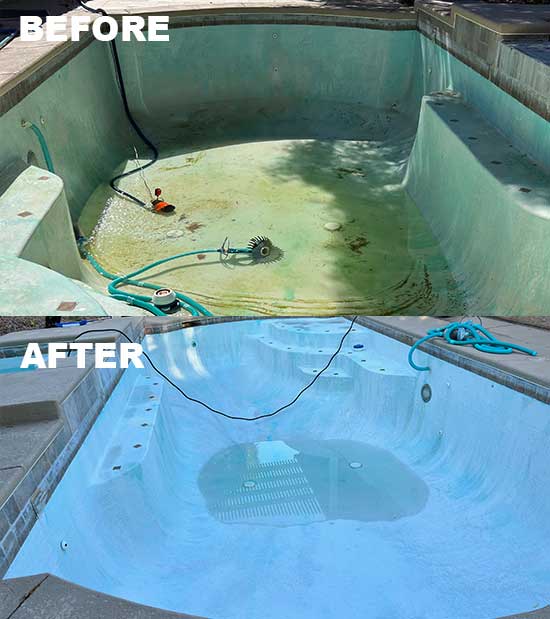
If you're fighting recurring algae or dull water, CYA or TDS may have climbed too high for chemicals alone to fix. A drain and acid wash every 2–3 years resets water quality and makes weekly maintenance dramatically easier.
Your Weekly Routine — 5 Steps
- Empty skimmer & pump baskets — Restores flow, reduces pump strain, and improves surface skimming so debris doesn't recirculate.
- Quick skim — Surface debris sinks within hours and feeds algae. A fast pass keeps water clear and reduces sanitizer consumption.
- Brush hot spots — Steps, benches, tile line, around returns. Brushing disrupts biofilm and scale so chlorine can sanitize effectively and stains don't set.
- Spot vacuum as needed — Fine desert dust clouds water and clogs filters fast. A quick pass preserves clarity between professional visits.
- Test & tweak — Free chlorine, pH, alkalinity. Balanced water protects surfaces and equipment, prevents irritation, and keeps algae away.
- Top off water — Keep waterline at the skimmer mid-point. Low water causes air ingestion that can damage the pump and cut filtration efficiency.
Fast Adjustments
Chlorine low? Dose liquid chlorine or shock after sunset to avoid UV burn-off — you'll get significantly more effective sanitizer.
pH off? Below 7.2 — add pH up. Above 7.8 — add pH down. Re-test in 30–60 minutes with the pump running.
Alkalinity low? Raise to 80–120 ppm. Low alkalinity causes daily pH swings that make chemistry hard to maintain.
Las Vegas & Henderson Specific Tips
- After a windy day: Brush extra and consider a light shock — dust load spikes dramatically after desert winds.
- After pool parties: Empty baskets and test chlorine the next morning — organics from sunscreen and body oils consume sanitizer fast.
- Chemical timing: Always dose chlorine in late afternoon or evening — less UV means more effective sanitizer.
Pump & Filter Basics
- Runtime: Summer 8–10 hrs/day; Winter 4–6 hrs/day (two cycles is better for capture).
- PSI: Clean or backwash when pressure rises ~8–10 PSI above your clean baseline.
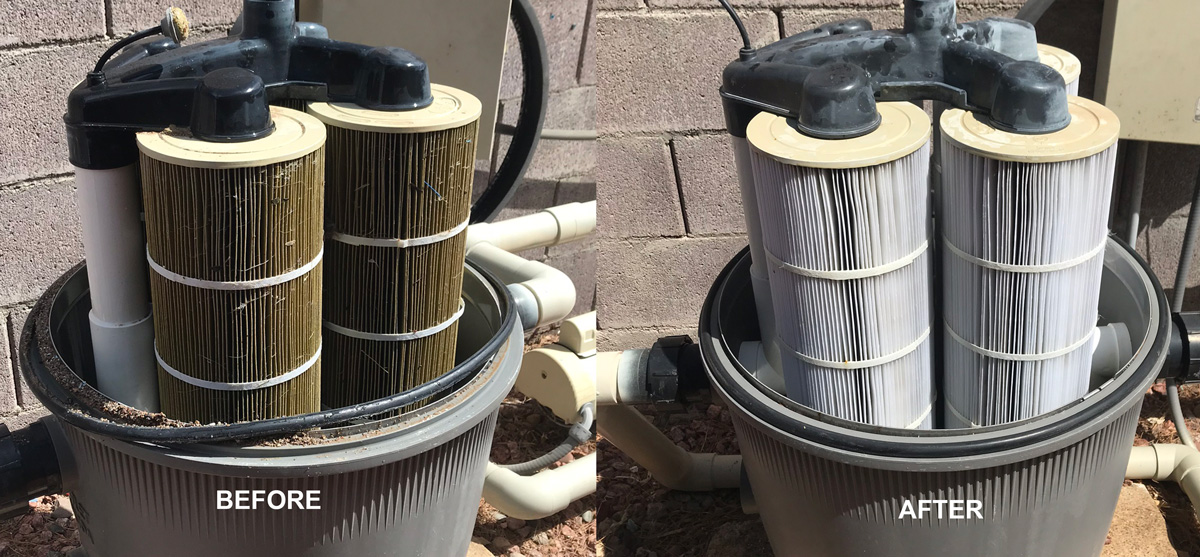
- Filters: Cartridge cleaning every 2–3 months — desert dust clogs media far faster than other climates.
Quick Troubleshooting
- Cloudy water: Check chlorine and pH, brush, extend runtime, clean filter, re-test.
- Algae spots: Brush vigorously, shock in the evening, verify CYA isn't too high. Repeat in 24 hours if needed.
- "Chlorine smell": That's usually combined chlorine — shock the pool to break it down.
Rather Skip the DIY?
Our CPO®-certified technicians handle everything — chemicals included, no surprises. Weekly service from $150/month in Las Vegas & Henderson.
Weekly pool service in Las Vegas · Pool service in Summerlin